Have a question?
Message sent Close

The Naganuma Method


The School’s primary objective is to develop each of our student’s ability to communicate effectively in Japanese. Because a language is inextricably linked to the culture where it is born, Naganuma has always focused a great deal of attention on programs and lessons that nurture the student’s understanding of the Japanese culture.

The Birth of the Naganuma Method

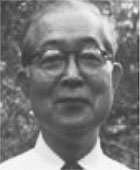
Naoe Naganuma, The founder of the school

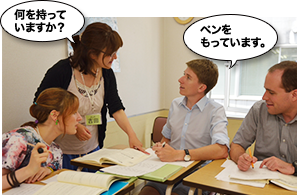
The School’s founder, Naoe Naganuma, was influenced by the Oral Method of language training introduced by the British pioneer in language pedagogy, Harold E. Palmer. He subsequently went on to develop the Mondou (question-and-answer) Method specifically for Japanese language education which eventually became known as the “Naganuma Method”.

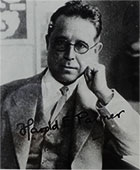
Harold E. Palmer, the British educator

As language use and the technology of language training have evolved over the ensuing decades, Naganuma has remained at the forefront in language teaching methods and in the development of graduates with the ability to communicate and function professionally in a wide range of fields that demand fluency in Japanese.

Three Core Features of Naganuma

Full Support

We provide support in a multi-faceted manner to all our students. This is the school’s foremost strength. We have established a support system that enables students to realize their objectives with more certainty. We support each one of you to reach your goal whether it is to learn Japanese culture through the language, to advance to Japanese higher education or to find employment where you can use your Japanese skills.


The teachers will guide each one of you to enhance language skills. Full-time advisory staff will give consultations to support you to fulfill your expectations regarding your academic and/or professional career. Our staff also gives you a helping hand to cope with daily-life problems in your language.


Diversity

Our students come from many countries and are of many ages with varied backgrounds and objectives. The students and the school staff are also diverse in their experiences. Their Japanese that you hear is also diverse. This diversity is a special feature of the Naganuma School.

 
Networking

There is a special bond connecting Naganuma School people. It brings together people from varied origins, Japanese business and academic societies, as well as graduates and current students, and even children and parents who may both be Naganuma graduates. The School creates an enriching network through Japanese language and education. This bond will certainly expand your opportunities in many fields.

Features of the Naganuma Method

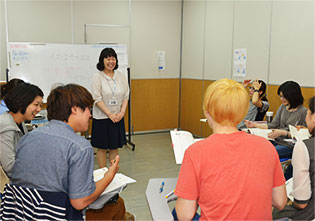
  • 1 Only Japanese is used in class from the start.

    Purpose
    This helps the student to make it a habit to think in Japanese.
  • 2 With systematic 'question-and-answer' approach, lessons focus on situations where language is used.

    Purpose
    This helps students to acquire practical Japanese language skills.

Team teaching

  • 1 3 teachers are in charge of 1 class in
  rotation

    This allows the students to experience different Japanese individualities and instruction styles.

  • 2 Classes are small-sizes (max.15 students).